We are a supply chain management firm with experts dedicated to achieve results
.png)
It is important that the supply chain strategy enables a performance that meets the requirements in the overall business plan. For instance if the business plan includes an aggressive growth plan it might be difficult to combine that with a supply chain strategy focusing on being cost efficient. A fundamental part is to understand which flexibility is needed in the supply chain to enable the overall targets. It is not until customer demand and need of flexibility is known that the strategy work can begin.
The basic questions to answer before developing solutions are
The supply chain design must evaluate if there is a need to change the overall supply chain network to meet the requirements (including ways for de-coupling and postponement to gain flexibility).
MYSIGMA has long experience in developing supply chain strategies and designing solutions supporting growth, flexibility and resource utilization in both manufacturing and retail industries.
The differentiating factor of retail supply chain from other is in the volume of product movement and the fast-moving nature of the products.
No matter if a you are a brick and mortar retailer, a pure player, a multi channel retailer or if you have gone all the way to become an Omni channel retailer, MYSIGMA can help in the design of the supply chain strategy to optimize service and cost.
Manufacturing companies deal with complex global challenges such as increasing customer expectations and requirements for short lead times and high availability, fluctuating commodity prices, rising transportation costs and an unstable global economy. Under these circumstances, setting the right production strategy and network is of vital importance to achieve competitive advantages.
MYSIGMA supports companies in order to design and execute a strategy that best combine assortment, inventory and service with current and future supply chain demands in order to enable growth, minimize costs and maximize profit.

Service and differentiation policies are vital sub areas in the supply chain toolbox. Service is a kind of investment e.g. free capacity, stock availability, express transports, to strengthen market competitiveness. The “big question” is how much service is worth in terms of revenue growth and margins? To take the right decision regarding service policy a baseline of historical demand and service is needed as a reference. This is often done in a periodic management workshop forum where volume development, assortment mix, demand and service measurements are reviewed.
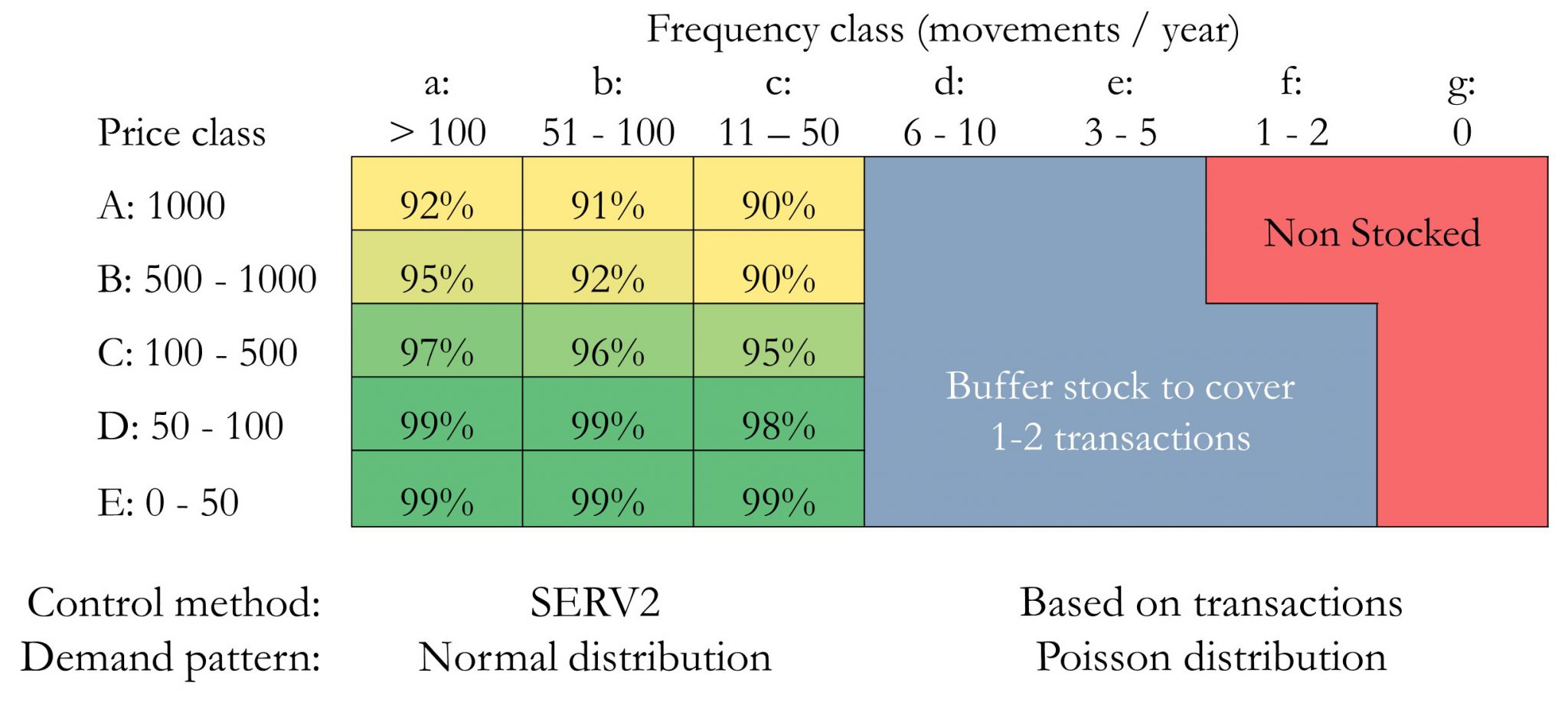
Assortment classification is a way of simplifying the decision process by enabling visualization of the complete assortment into different classes and understand the essence without looking into every detail. To make the right classification is not a technique but an art which have been in MYSIGMA's toolbox for decades. Correct classification enables service policy differentiation, see illustration where price- and frequency classes are used as base for inventory strategy differentiation. Which classes to use is decided based on business criteria and could also include margin, supply risk, lead time etc.
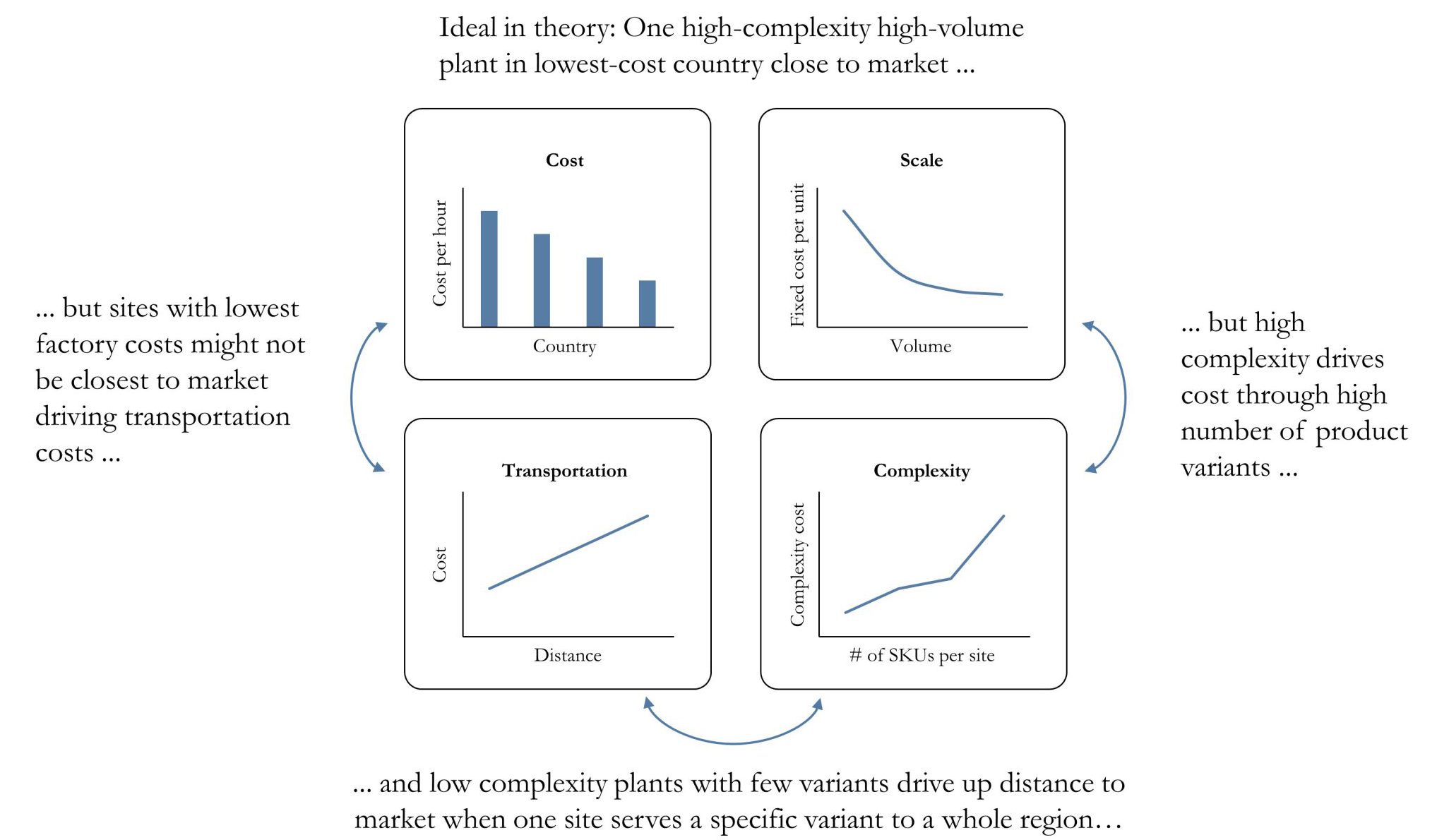
Supply chain network refers to sourcing setup, manufacturing location and distribution structure. It defines how manufacturing and sourcing are linked to markets in terms of geographical location and value creation. The main motive behind changed network is to align operations strategy with business strategy to support ambitions to increase competitiveness or a consequence of rapid growth. In the evaluation, the strategic objectives have to be considered at operational performance level to assure having a solid business case to take decision on for future setup. In theory, the ideal case is one high-complexity plant in lowest-cost country close to market but in reality, trade offs between cost level, economies of scale, complexity and transportation are evaluated in the business case, see principle in illustration.
MYSIGMA has solid experience in both footprint evaluations and to drive re-location projects of different kind, e.g
To secure performance within ERP and Business Intelligence (BI) solutions, MYSIGMA offers to guide and drive your journey to upgrade and implement digital platforms. MYSIGMA has many senior consultants with several years of business improvement experience from ERP and BI solutions to support Supply Chain and Operations environment. Our consultants have knowledge from various ERP systems and BI software’s in several large industrial companies.
Our expertise covers:
Our approach is to be close to the business and secure understanding of business requirements while utilizing existing blueprints and designs to deliver expected results.
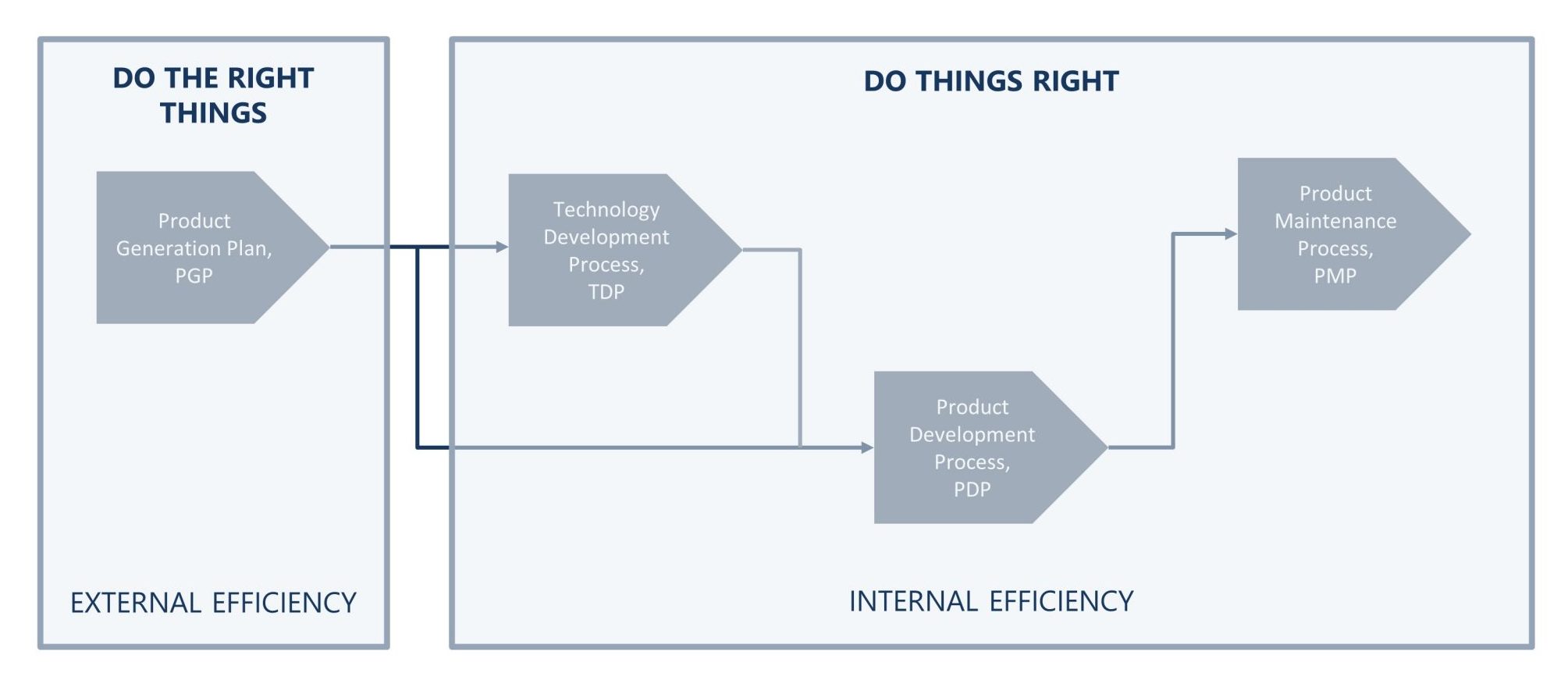
The product cost is set already in the product design phase. Doing things right from start will always outperform cost reduction and optimization throughout the life cycle of a product. MYSIGMA can help you and your organisation by making sure that the right product strategy plan is in place and that technology and product development processes are aligned to deliver your plan. We believe in planning for future growth and profitability.
MYSIGMA has the experience to drive the journey towards a more professional approach working with Product Generation Plans, Technology Development and Product Development.
Keeping order in stocks and having solid processes for materials management are often low prioritized areas at many companies. It´s left to IT-systems and low skilled “executors” rather than analytical planners to take business critical decisions. However, the right focus on materials management is among the most powerful and fastest way to reach improvements in working capital utilization, service levels towards customers and resource utilization in organizations which leads to increased profit and strengthened competitiveness.
Capital productivity can be measured as the relation between inventory and turnover and looking into the development in Swedish companies from year 2000 shows that almost nothing has happened! Even if working capital management is a main topic in many board rooms the trend of working capital productivity in Swedish industry is slightly declining.
During the same period billions have been invested in projects and advanced IT-systems to support companies in managing goods flow and inventories and as seen above, without success. Why? What does it take to be successful? Of course, we need data power but more important a clear vision of how to reach the target, how do we motivate the organization and how can we simplify the conditions that have big impact on materials management?
MYSIGMA has solid experience and helps companies to effectively undertake working capital improvement programs. To achieve sustainable results, we take an end-to-end view on the value chain while explicitly taking cross-functional and cross-company interdependencies into account. Our special attention is linking operational and financial performance together. Thereby, we can address the growing need to introduce a common ground between the CFO and COO to drive integrated business planning and further improvements. These efforts are supported by our proven working capital toolbox that builds upon the most innovative approaches in working capital management.

Post-merger integration is about value creation beyond the deal and to achieve synergy effects. To integrate and maximize the synergies when two companies merge there should be a focus on supply chain where 80% of the cost is generated and customer service is created.
Typical examples of supply chain challenges and opportunities in post-merger integration are:
Be clear where the savings in the supply chain integration is coming from. To achieve expected synergies, it´s important to do the homework, don´t integrate what you don´t need to integrate. Spend necessary resources and time on defining and quantifying synergies before integration so you can focus the energy on the big savings.
From supply chain perspective it´s important to understand how different post-merger strategies support overall competitiveness; how can supply chain support targets on growth, cost and other financial targets. A common mistake is that only one perspective is considered, and the expected synergy is lost. For example, only focusing on reduced spend resulting in longer lead time and reduced flexibility.
MYSIGMA have over the years supported many clients in different post-merger integration challenges. We have identified potentials early in the process and mapped individual benefits to visualize where the big synergies will come from. Our experience is that structure and facts are needed but in the end it´s people we are dealing with, so combining value focus with experience is vital to be successful in the change management beyond the deal.
Total cost of ownership with balanced cost distribution is key to understand margins when developing costing, pricing and business cases.
MYSIGMA have long experience in using total cost of ownership methodology in different kinds of challenges, e.g. supplier target pricing, make/buy decisions, assortment and category management as well as footprint evaluations.
Correct P&L cost distribution is crucial to understand underlying conditions and is also the base for bottom up simulations of future state scenarios. A good understanding of cost distribution is fundamental when it comes to measure improvements and to achieve sustainable results in different kinds of turnarounds.
MYSIGMA has extensive experience from working with clients to improve their profitability. A recurrent area with high impact on the performance is Sales & Operations Planning (S&OP) where the profitability is addressed from many angles. Quite often companies have a gap between their strategic and operational planning which leads to firefighting in execution, slow reaction time, low trust and functions working in different directions.
An effective S&OP process can support the strategic targets on growth, return on sales and return on capital employed. MYSIGMA strives towards an effective S&OP process that drive cross functional collaboration & decisions to enable the supply chain to meet expected demand and to ensure growth.
The S&OP process will support allocating the critical resources – people, equipment, inventory, materials, time and money – to most effectively satisfy the customers, in a profitable way.
The S&OP process ensures early focus on any potential gaps in business performance and the decisions needed to close the gaps well ahead in time. S&OP typically includes Demand Planning, Supply planning, Balancing Demand and Supply and Financial evaluation of the plan.
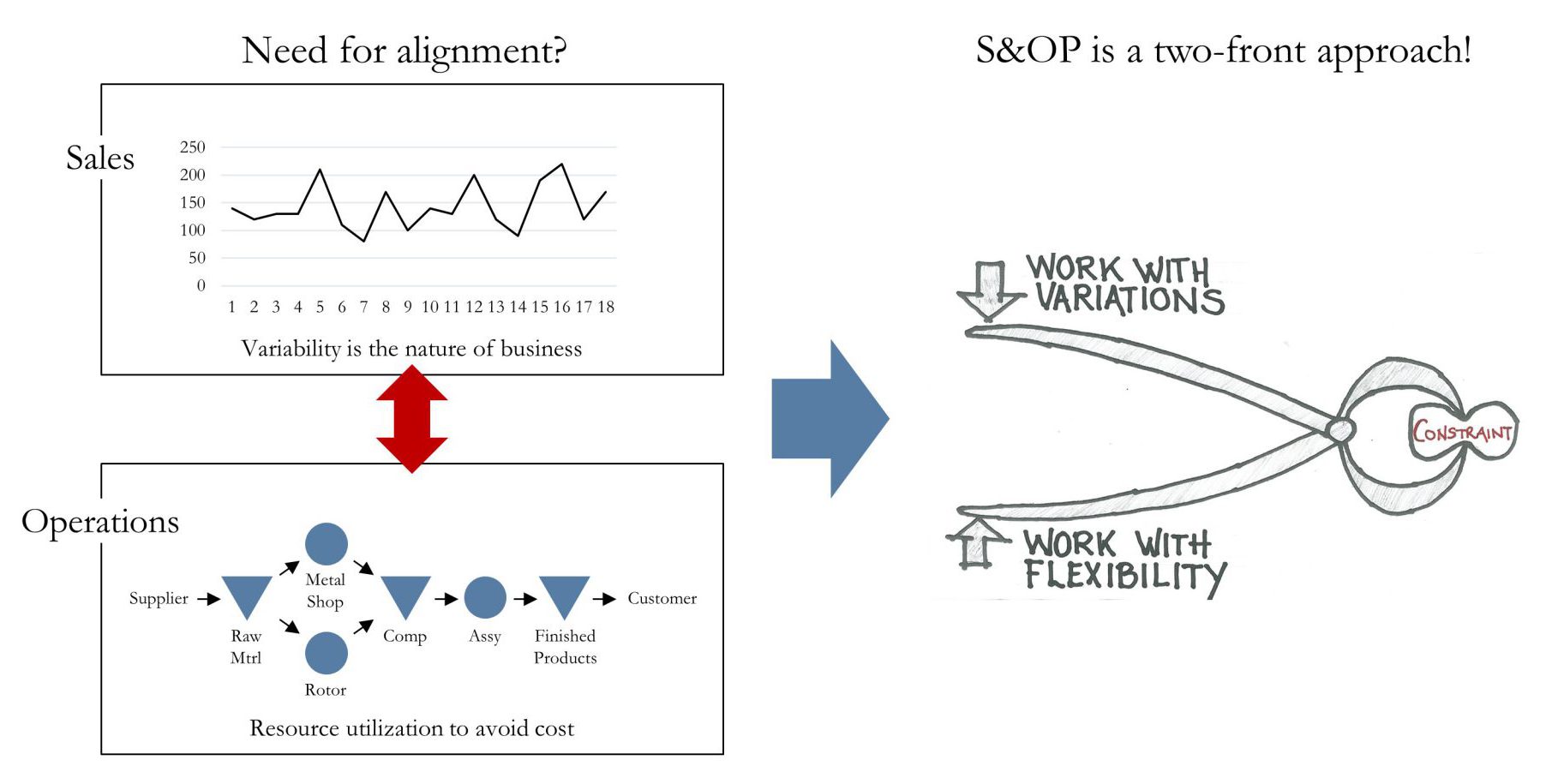
Successful S&OP is about alignment and it´s about a two-front approach. Both sales and supply must agree on the plan ahead even if they both know there will be deviations. Supply must then understand deviations to be able to design most efficient flexibility. You never win the S&OP battle only focusing on perfect demand planning or perfect supply planning. You must work with both to gradually improve customer experience and be long term successful.
In Integrated Business Planning (IBP), S&OP has evolved to fully integrate the financial planning of the business, including improved simulation and modelling of scenarios. MYSIGMA has the knowledge and experience to help companies to setup the foundation for an effective Sales & Operations Planning process as well as supporting more mature companies to move into fully Integrated Business Planning.
The journey towards a more mature S&OP process includes a high degree of change management. To encourage engagement and a deeper understanding we could strongly recommend the experimental learning experience The Fresh connection where different parts of the organization learns how collaboration will improve the result.
A combination of strategical vision and targets together with tactical and operational processes, routines and tools is important to reach the expected results in terms of material availability and capital tied. Inventory management focus on the tactical planning process where steering parameters are tuned based on changed demand and changed service policy. One significant area where weaknesses often are found is in differentiation of stock settings. By using different methods for classification, you will get a structured approach and keep it simple to understand why different items get their stock targets.
MYSIGMA normally divides the item/product range into at least two different classes, but depending on industry there could be more, based on frequency, volume, price, lead time, margin etc. One of the keys in inventory control is to identify the best structure for the classification and service settings.
The theoretical framework behind inventory management isn´t enough to make it happen. To a large extent also process and organization are vital ingredients to get expected result. To secure sustainable solutions within inventory management MYSIGMA therefore build improvements based on:
Many concepts and methods have their origin in the founding of MYSIGMA and have been further developed and fine-tuned over the years to deliver cutting edge solutions within inventory control.
Over decades MYSIGMA has helped a large number of clients within different business segments to improve their inventory management process and to reach sustainable results.
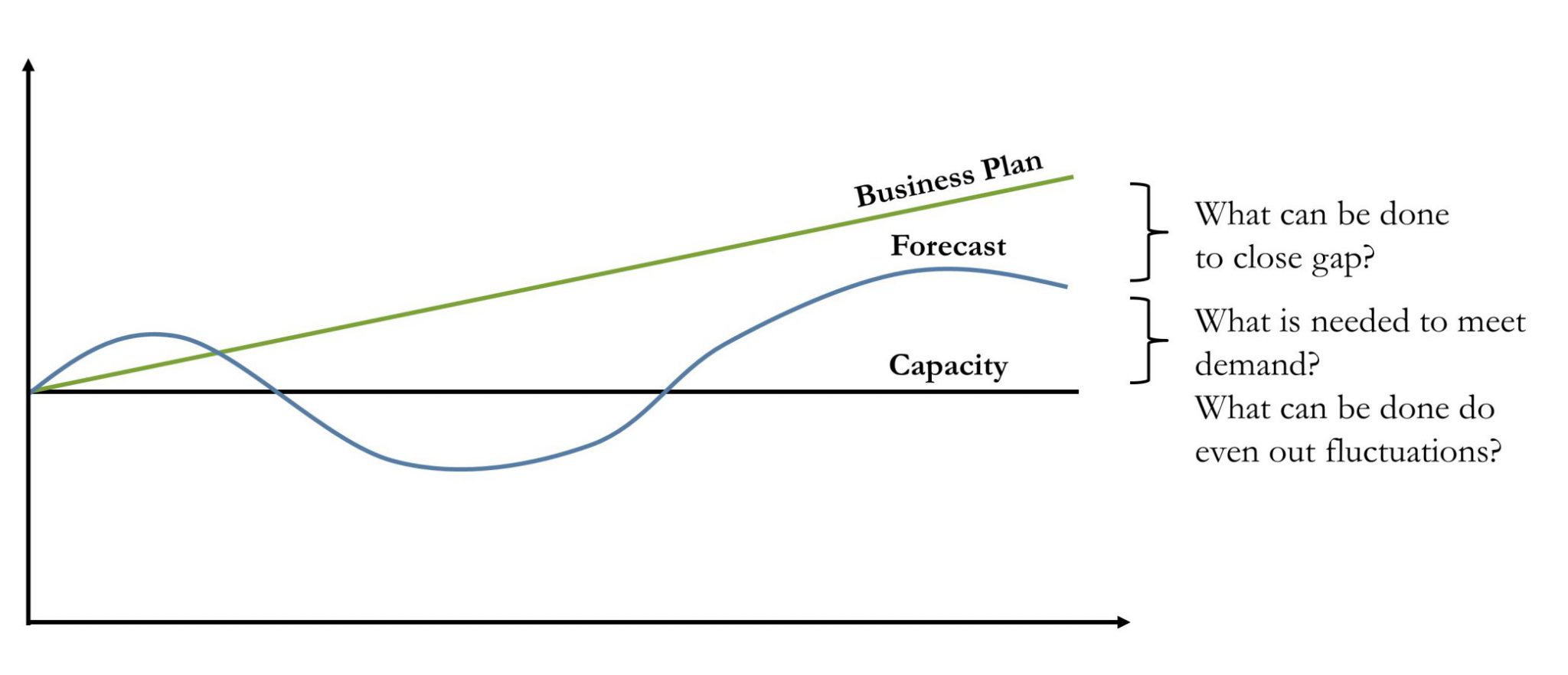
Understanding of demand is the key to setting up a planning process and production flow that meets the requirements and expectations of the customer. Quality in forecasts and in demand planning enables better utilization of inventory and capacity.
Operational planning is about developing solutions and action plans for the client’s material flow and production planning with the aim of better responding to customers’ needs and the client’s own productivity. This means to design the planning process so that inventory and production are used to improve responsiveness and production resources can be better utilized. Examples of areas we will highlight and provide solutions for are:
Systems used in modern supply chains generate large amounts of data and for that data to give insight and draw conclusions, some kind of BI (Business Intelligence) software is needed. BI and analytics is used to make data-driven decisions in a supply chain context. In short, the purpose of BI and analytics is to control supply chain performance and identify opportunities to increase overall profitability. This is usually done by acquire, identify, and categorize raw data from different data sources within the supply chain. Further on the data is analysed to find patterns, and models developed to predict future events, and recommend actions to maximize profit.
MYSIGMA has over the years in collaboration with numerous clients developed BI data models packaged with configurable logic and workflow to support supply chain decision-making. Our supply chain experts work with the client to design concepts and data models that power their supply chain performance. These models are utilized as a framework of reporting, alerting and increasing workflow capabilities.
MYSIGMA has developed data models and dashboards that serve as tools for performance measurement, decision-making, supply chain control, etc. For example:
Today many companies are challenged to implement new ideas and business models in their sourcing and procurement organizations to reduce costs while maximizing value from supplier relationships. Supply chains and material planning must be upgraded with modern supply system concepts. Logistical standards must be agreed upon with suppliers: risk sharing, volume flexibility, joint planning and forecasting or the adherence to delivery targets.
MYSIGMA helps companies with the optimization of sourcing processes as well as strategic and operational purchasing. We assist to reduce costs and improve performance by cutting operating expenses and freeing capital. We address all sources of value creation—people, sourcing, processes and technology—to make the procurement organization achieve high performance.
MYSIGMA services include:
Manufacturing companies deal with complex global challenges such as increasing customer expectations and requirements for short lead-times and availability, lower cost competitors, fluctuating commodity prices, rising transportation costs and an unstable global economy. Under these circumstances, setting the right production strategy and network is of vital importance to achieve competitive advantages.
MYSIGMA collaborates with manufacturers to help design and execute a strategy that will keep them competitive in a constantly changing world. We help our clients build a strategy which focuses on the what and where of the global or regional manufacturing network. We support companies in developing best in class manufacturing setups to ensure efficient supply of products to customers. Core areas of developments are the right level of vertical integration, make or buy decisions and the manufacturing footprint design.
MYSIGMA services include:
The quality of distribution logistics has a direct impact on customer satisfaction and distribution activities are often a key driver of overall logistics cost. Constant refinement and improvement is essential for creating an efficient supply chain.
MYSIGMA supports companies in optimizing quality of service and efficiency of their distribution activities. Main optimization levers are a flexible and cost effective distribution network and warehousing, balance between outsourced and in-house logistics activities as well as effective management of logistics service providers. Outsourcing performed right enables an organization to focus on its core business, engage with best-in-industry service providers, improve internal resource utilization, and provide the scalability necessary to respond quickly to demand variability.
MYSIGMA services include:
MYSIGMA has a partner agreement with the Dutch company Inchainge to facilitate their business simulation games.
Experience the power of true alignment and a well-articulated supply chain strategy, supported by tactical skills and knowledge. Tear down functional silos and create the right cross functional mindset.
Experience how Working Capital Management is essential to a company’s fundamental financial health.
Experience the transition from a linear to a circular value chain by implementing a successful circular strategy.
The Fresh Connection (TFC) is an advanced online business simulation that engages participants to work together as a team in making strategic and tactical decisions in order to turnaround and save the fictional company – The Fresh Connection – from financial ruin.
Working in teams of four do the participants represent the functional roles as:
They are challenged to consider corporate strategy and business objectives – putting strategy into action! Crucial for success is to move from silo decisions to collaboration! There is also a need for contemporary business issues, trade-offs and structured decision-making processes such as Sales & Operations Planning.
By participating in “rounds” that each constitute six months in the real world, participants are encouraged to be proactive and think more about long term decisions which can influence business performance rather than short term reactive measures. Most importantly – good Supply Chain performance and execution of corporate strategy has a direct positive impact on company profitability which is followed up in the company´s P&L and simplified balance sheet.
Everyone from Management teams to Planners, from Finance to Supply Chain and Sales.
The Fresh Connection is an ideal development opportunity for cross-functional teams and all those involved in optimizing the value chain and increasing business performance.
``Having the opportunity to try managing a position/responsibility you do not normally have and reflect and think in other terms to reach good results both within your area and the company as a whole''
``The tool and format were excellent!''
``Making it clear and visible how different decisions within one single area in a company strongly affect the outcome on other areas and thereby the total result''
To develop a complete organisation or as a part of a change journey, improved knowledge and common understanding are success factors.
MYSIGMA collaborates with Quick & Clever (quickandclever.com) to provide training modules, which lifts competence. Click on the pictures for content, trailers etc.


